Role
Design Lead (Film Page)
TEAM
2 Design Leads, 4 UX Designers
Timeline
3 months (Sep - Dec 2024)
overview
Opening Credits
What is Letterboxd?
Letterboxd is a social network platform for film enthusiasts. The app allows users to log and review movies they’ve watched, create watchlists and collections, and follow friends to see what they’re enjoying. Ultimately, Letterboxd fosters a vibrant community where film lovers can share their passion and engage in discussions about their favorite movies.
The Problem
Users find it difficult to discover niche films and form connections due to limited community features. The platform's lack of robust filtering and sorting also diminishes the ability to personalize content.
Our Solution
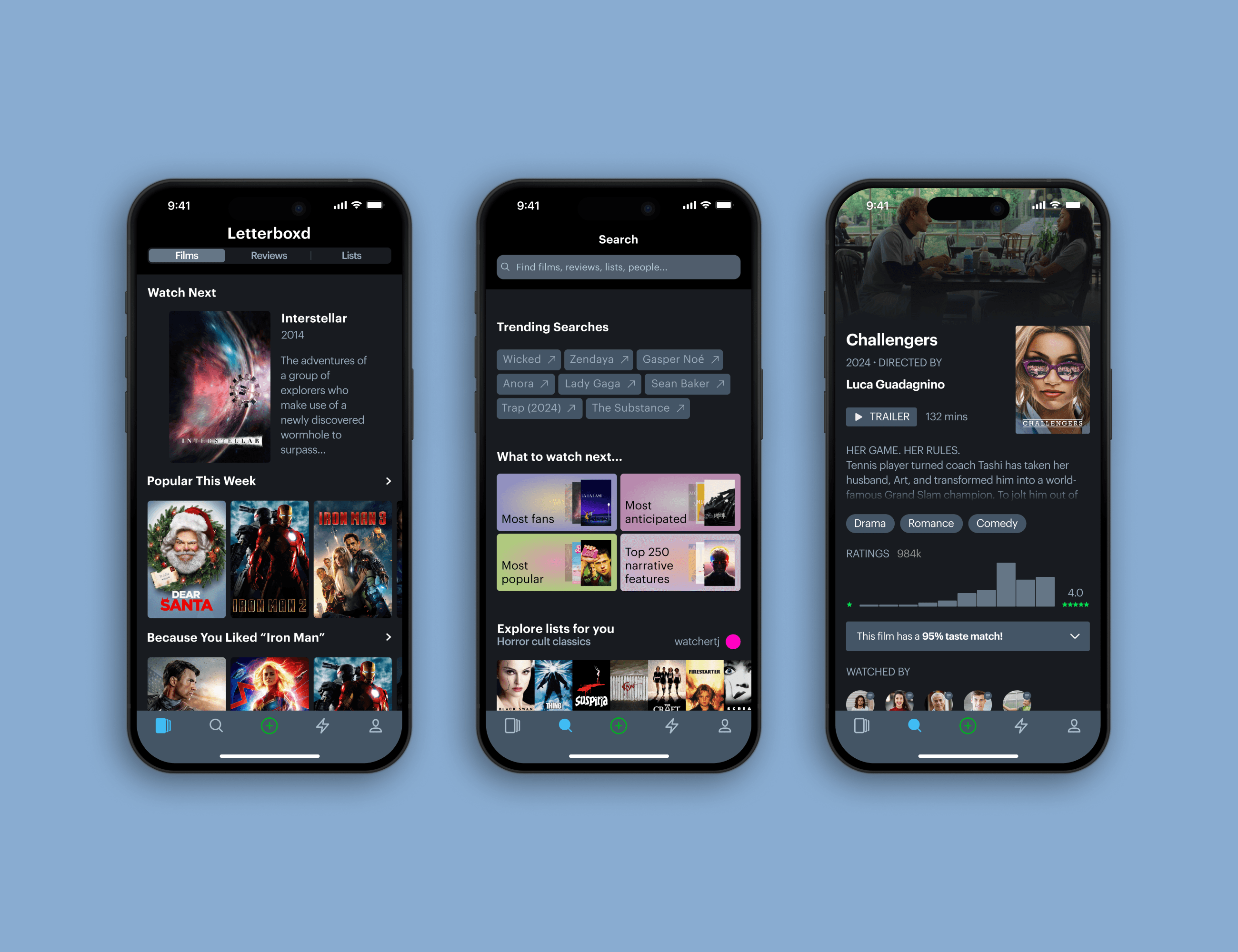
An app redesign that highlights niche movies based on user interests, emphasizes search and discovery with new functionalities, and adds to community features for enhanced film discussion.
Understand
Now Streaming: User Research

Letterboxd's social features create a sense of community.
While other film review apps have few social features, people can use Letterboxd to follow their friends and see what they're enjoying. However, limited community features and interaction options leave them wanting more meaningful ways to connect with other users.
Letterboxd is lacking in personalization and discovery.
Compared to apps like Goodreads that cater to user tastes, Letterboxd focuses heavily on promoting popular and trending movies. This makes it difficult to discover more niche, indie movies.
Interviewing Letterboxd users
We conducted 15 interviews to gain an understanding of Letterboxd's user base. Questions were structured around four categories: general habits, usability, reviews, and discovery.
However, we had an unforeseen problem… many of our interviewees were only casual users of the app, which led us to wonder: how might we capture the attitudes of avid users and cinephiles?

Reaching out to film enthusiasts
We decided to distribute a survey to UIUC's film club in order to get the perspectives of avid Letterboxd users. The questions were largely similar to the interview questions, only simplified. Using both our interview and survey responses, we used affinity mapping to cluster our findings into common themes.

But who really uses Letterboxd?
We were also concerned that most of our users were college students and wondered if this truly represented Letterboxd's user base. So, we did some secondary research about who uses the app:
Although founded in 2011, Letterboxd's user base has exploded since the beginning of the pandemic: From 2020 to 2024, its membership has grown from 2 to 14 million members.
An internal survey conducted in late 2022 showed that Letterboxd users, on average, watched more movies and spent more money on movies than general moviegoers.
On the app, which the company reports is how 75 percent of users access Letterboxd, the largest demographic is 18- to 24-year-olds.
In the beginning, Letterboxd mainly attracted film obsessives: hardcore cinephiles, stats fanatics, and professional critics. The shift toward a younger user base means the over 1 million new users in 2020 represent people who aren’t strictly cinephiles.
Synthesize
Insights to guide our design
Now that we had a clear understanding of users' habits and frustrations, we narrowed our findings down to three key insights that we planned to address in our redesign:
Limited discovery
People struggle to discover niche films on Letterboxd and often rely on outside platforms like TikTok, friend recommendations, or even local theater listings to find new movies.
Community features
People use Letterboxd mainly to follow their friends' activity, but limited community features and interaction options leave them wanting more meaningful ways to connect with other users.
Filtering & personalization
People want more robust filtering and sorting options to help them find reviews and content that are more relevant and personalized to their interests, improving their overall experience on the platform.
Meet Minnie & Isaac
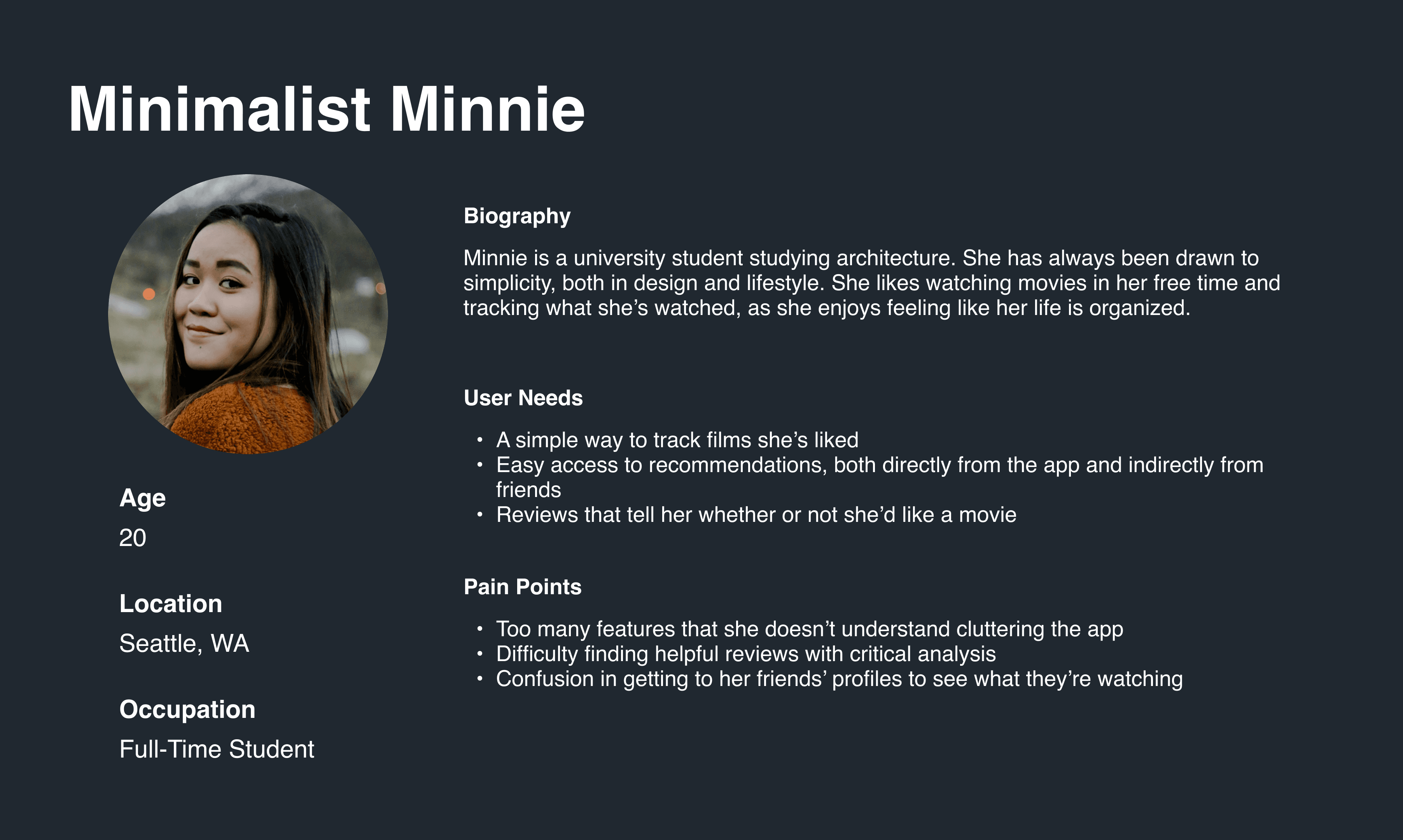
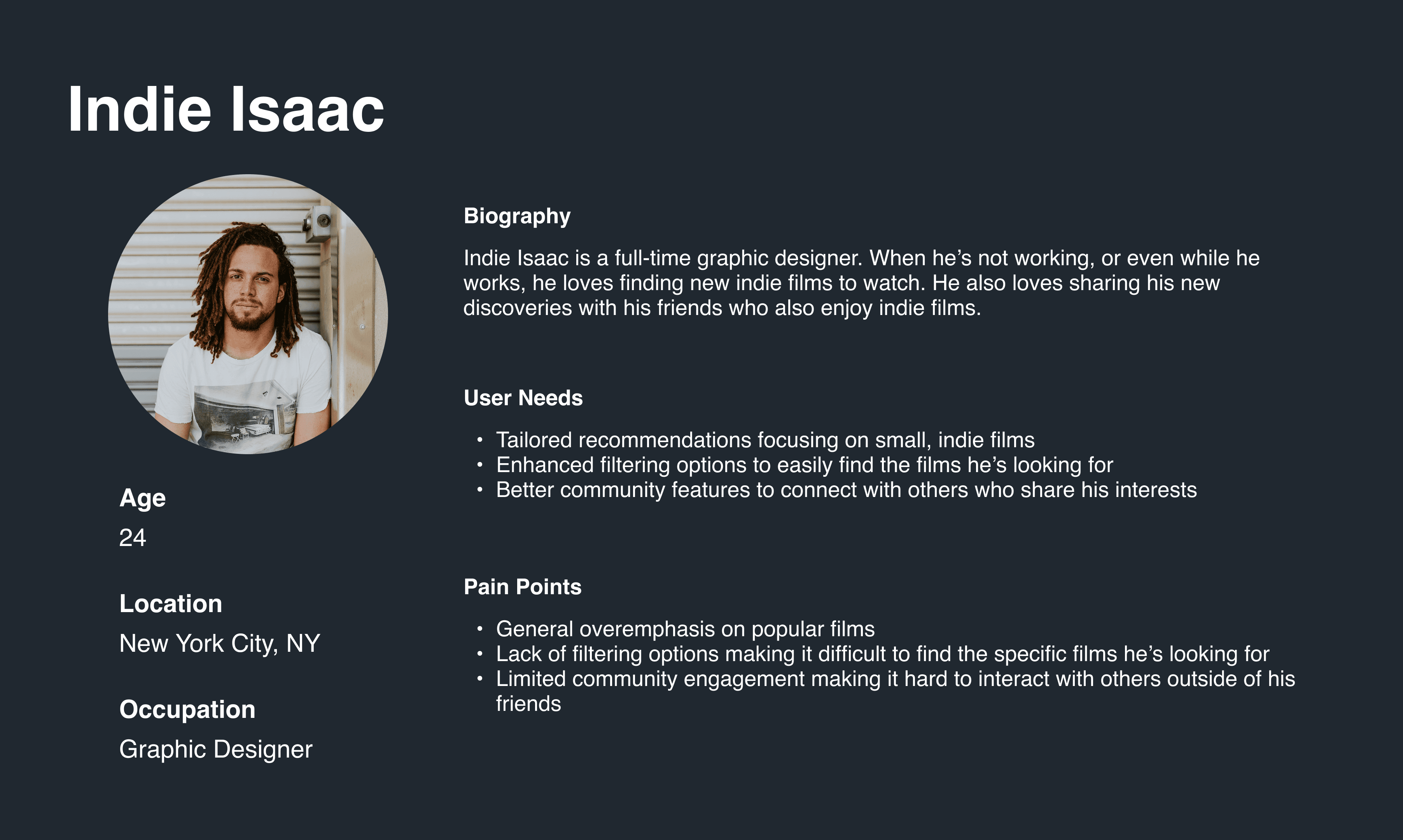
Using the insights derived from our interviews and competitive analysis, we created user personas that reflected real Letterbod users' needs and pain points. We also outlined journey maps that these users would follow, leading to “how might we" questions that arose at different stages of their experiences.
Our persona “Minimalist Minnie" reflects casual users who are confused by unintuitive filters and have trouble keeping up with friend activity.
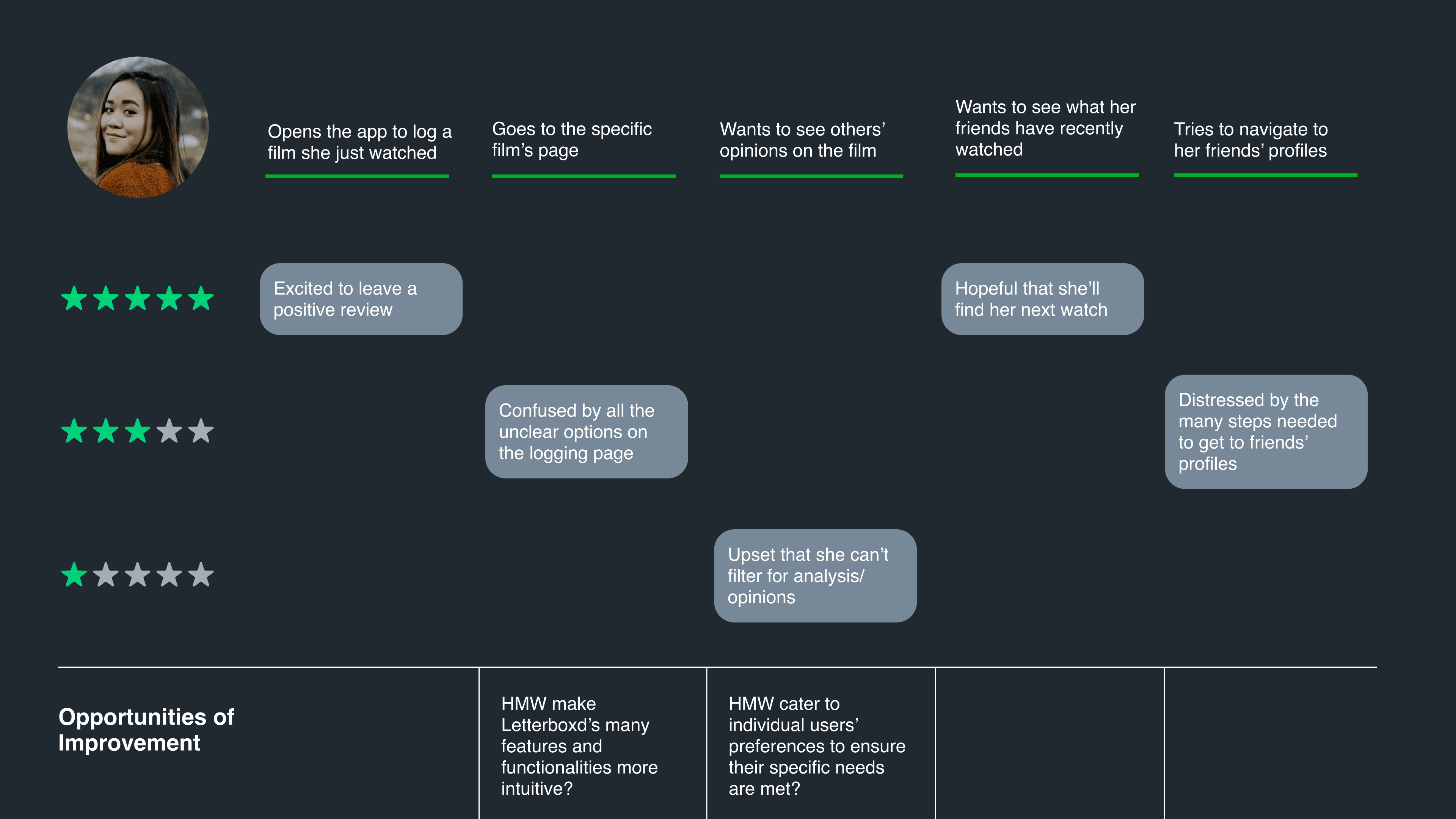
Meanwhile, “Indie Isaac" reflects avid users who have difficulty discovering films tailored to their interests, which ultimately leads them to use external sources.

Ideate
Low-Fidelity Sketches
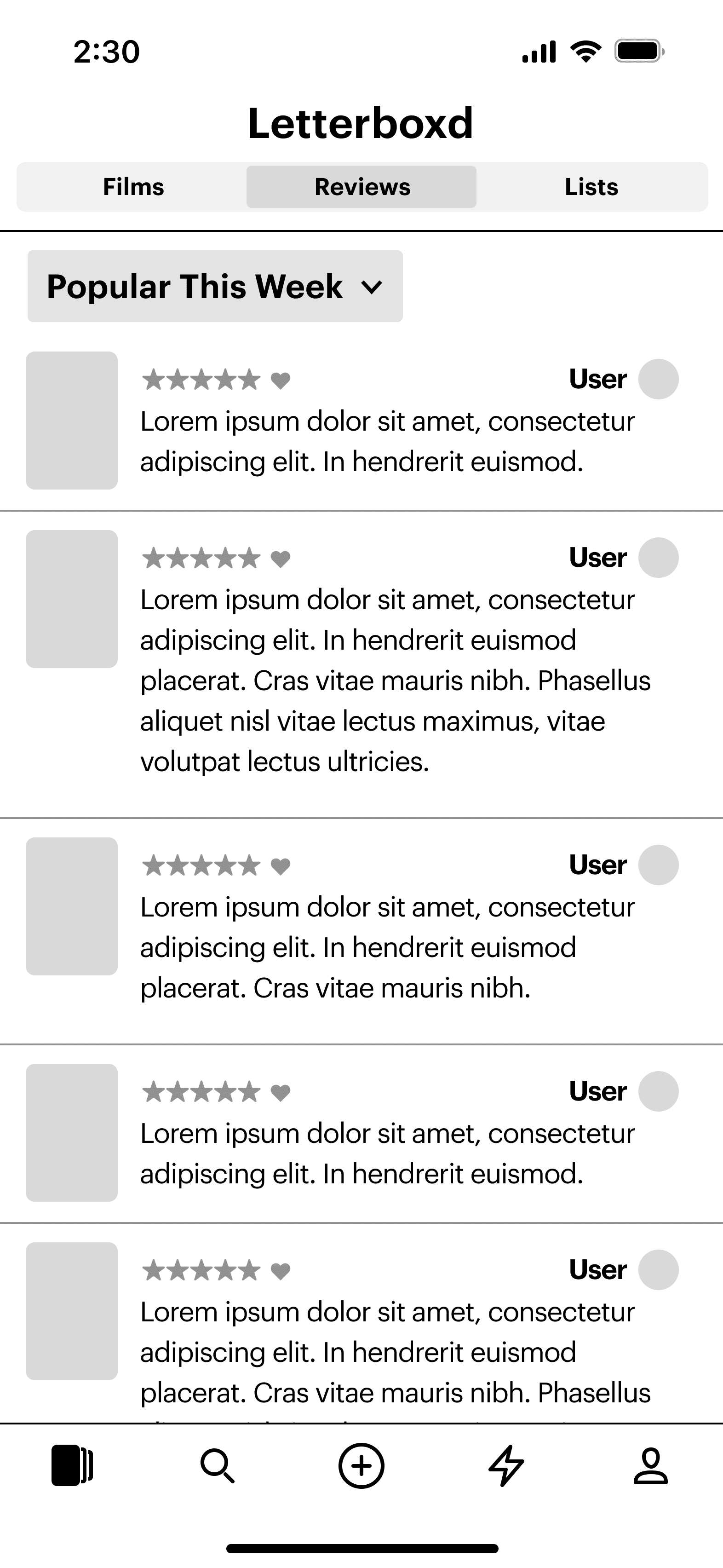
We started with rough sketches to communicate our initial ideas for the redesign. Each of us took two of Letterboxd's six main areas—onboarding, home, search, films, activity, and profile—and combined our ideas to determine which new features we should carry into mid-fis.

Information Architecture
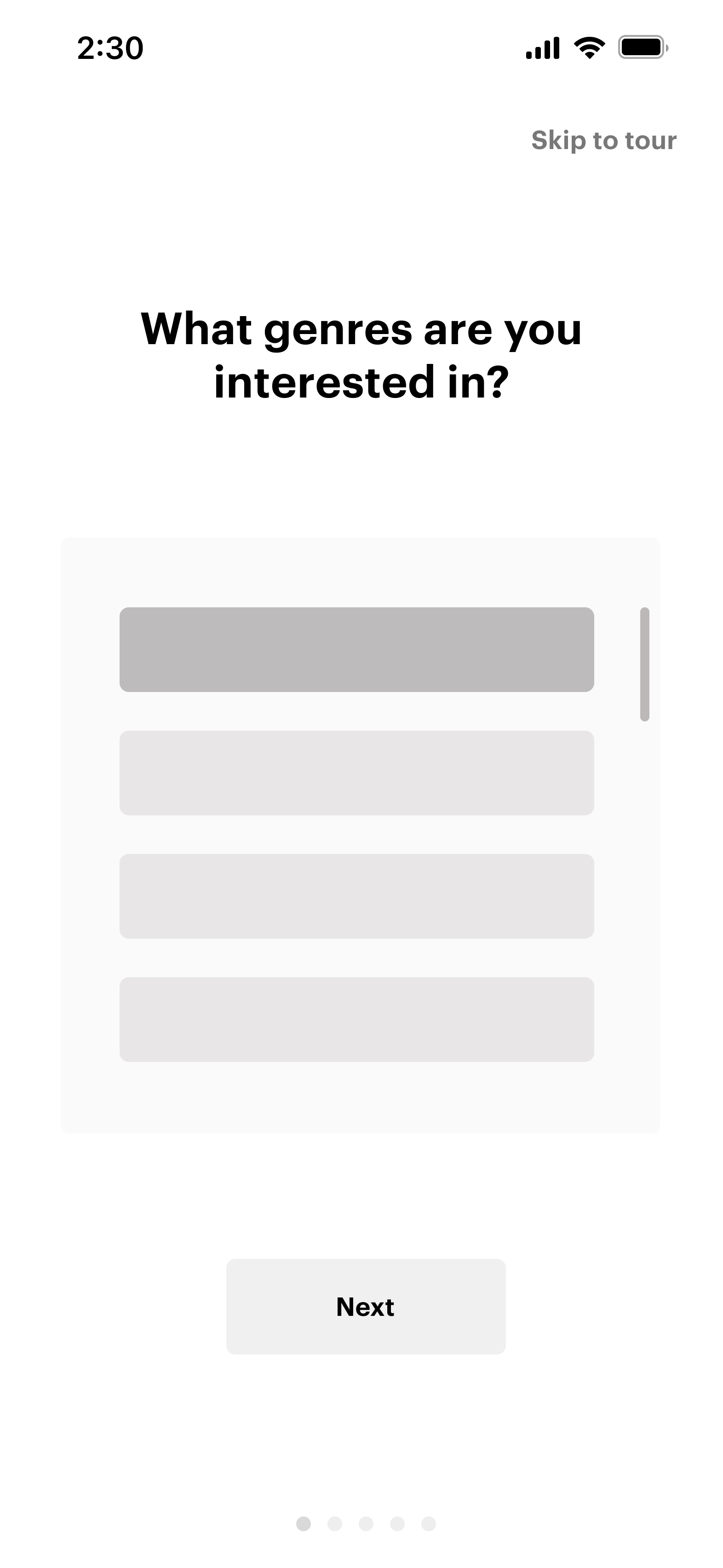
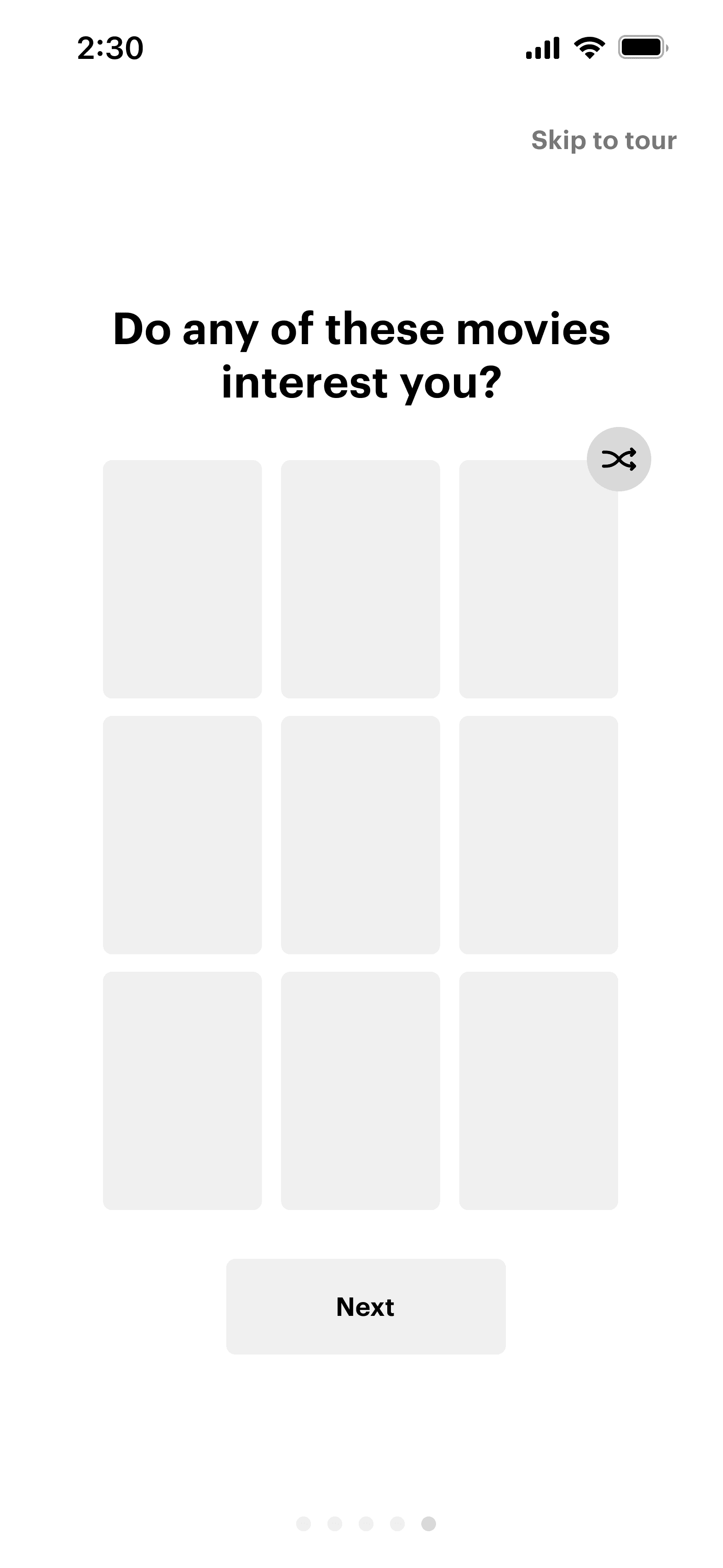
At this stage, we decided to add new features such as interest filtering, a fun movie recommendation quiz, and a "My Library" section in the profile. We also made small changes, like upcoming films in the activity tab, and removed the 'Journal' tab from the home page based on our finding that users rarely used it.
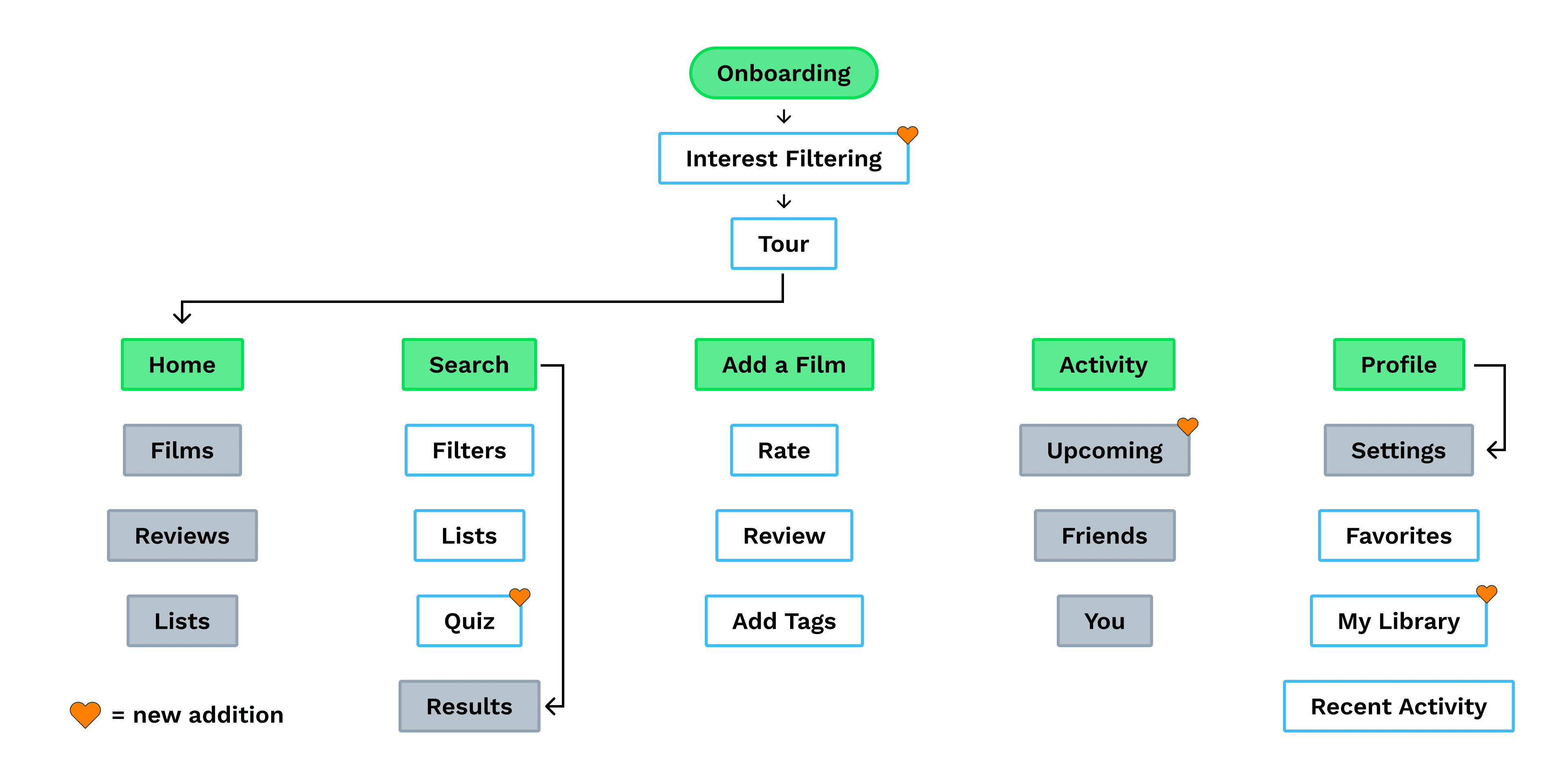
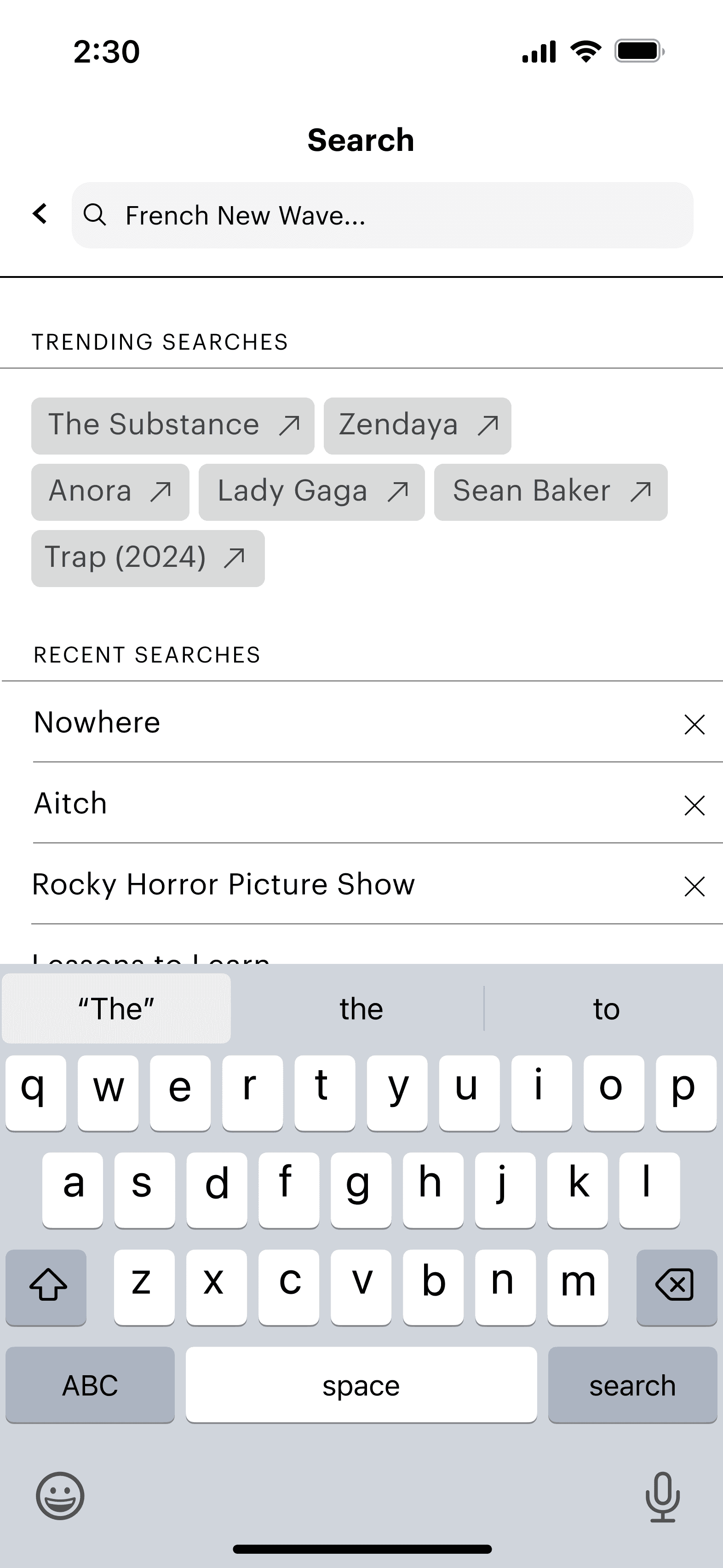
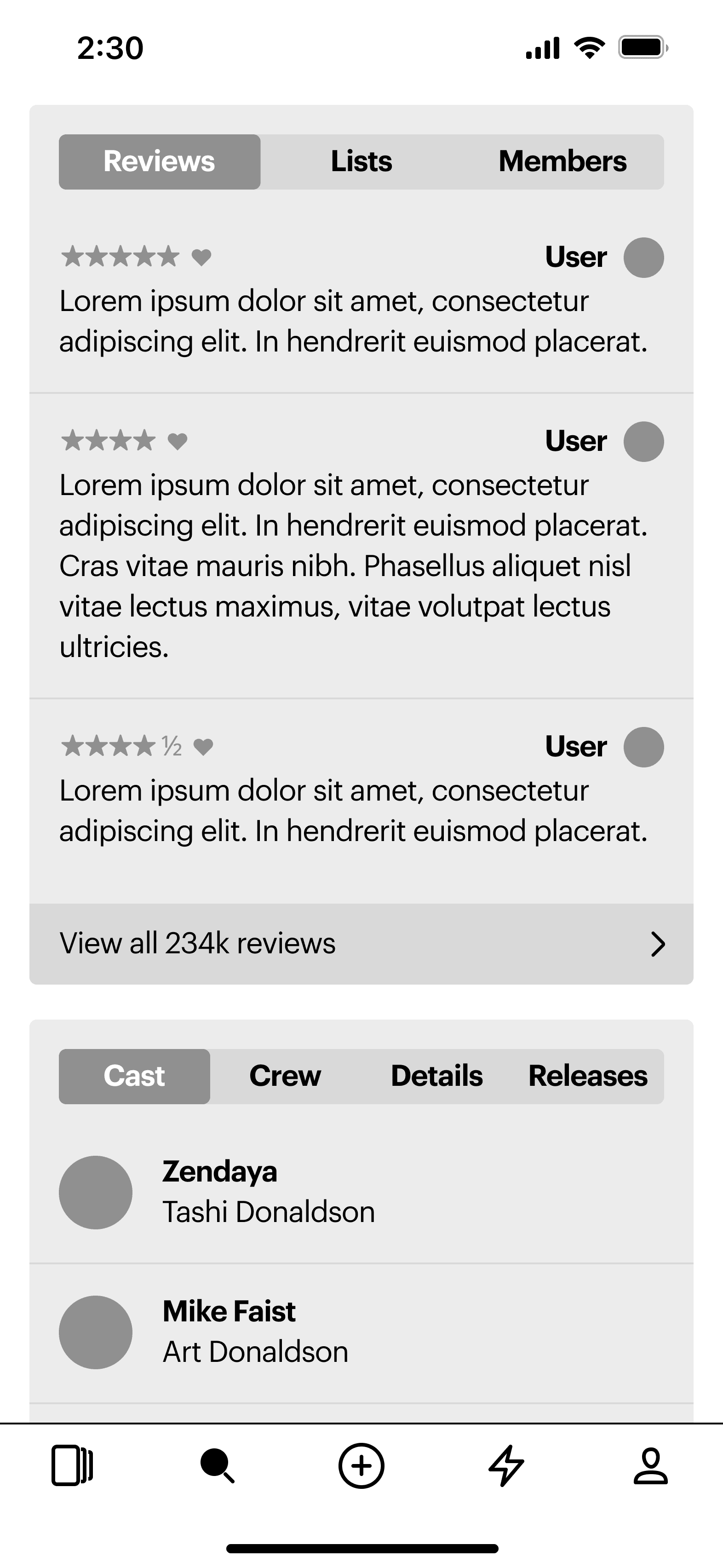
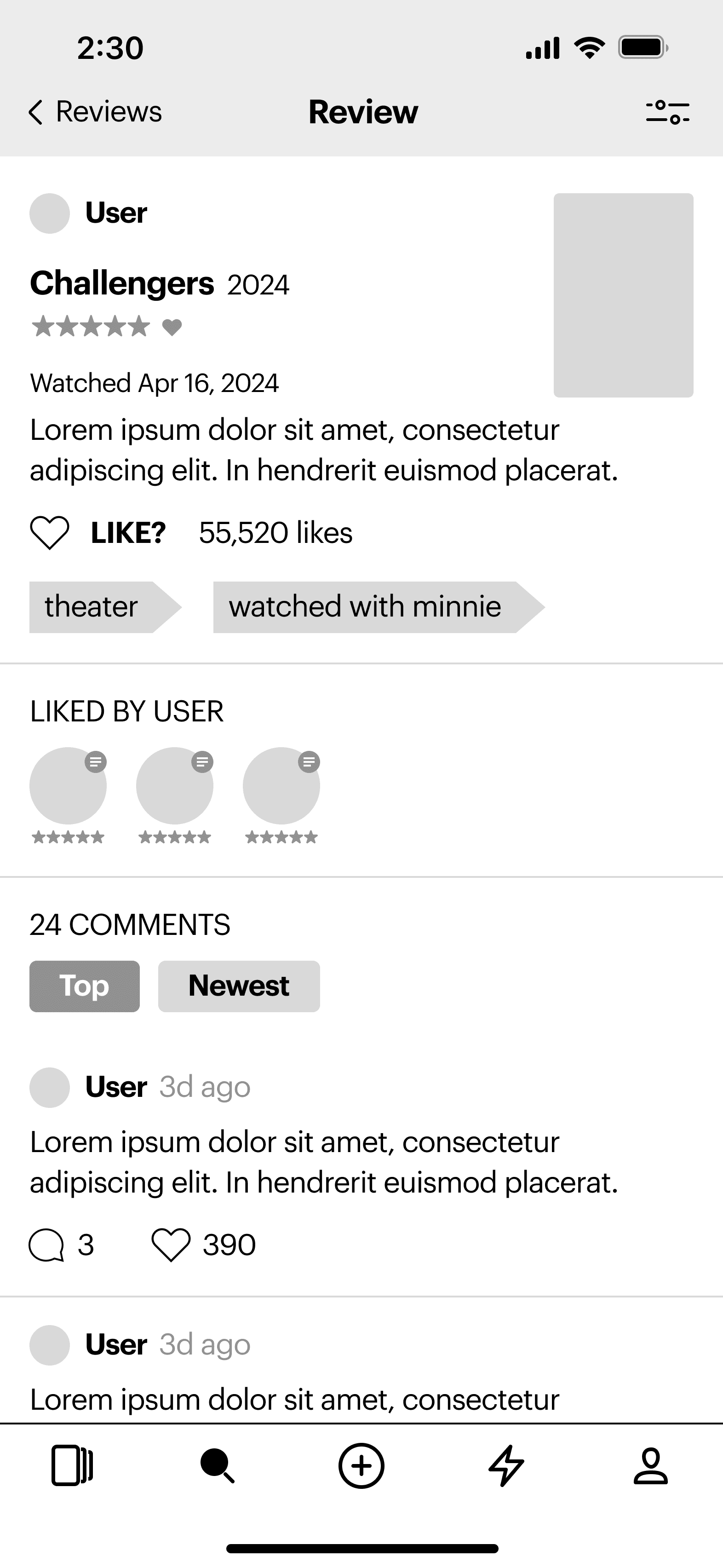
Mid-Fidelity Wireframes
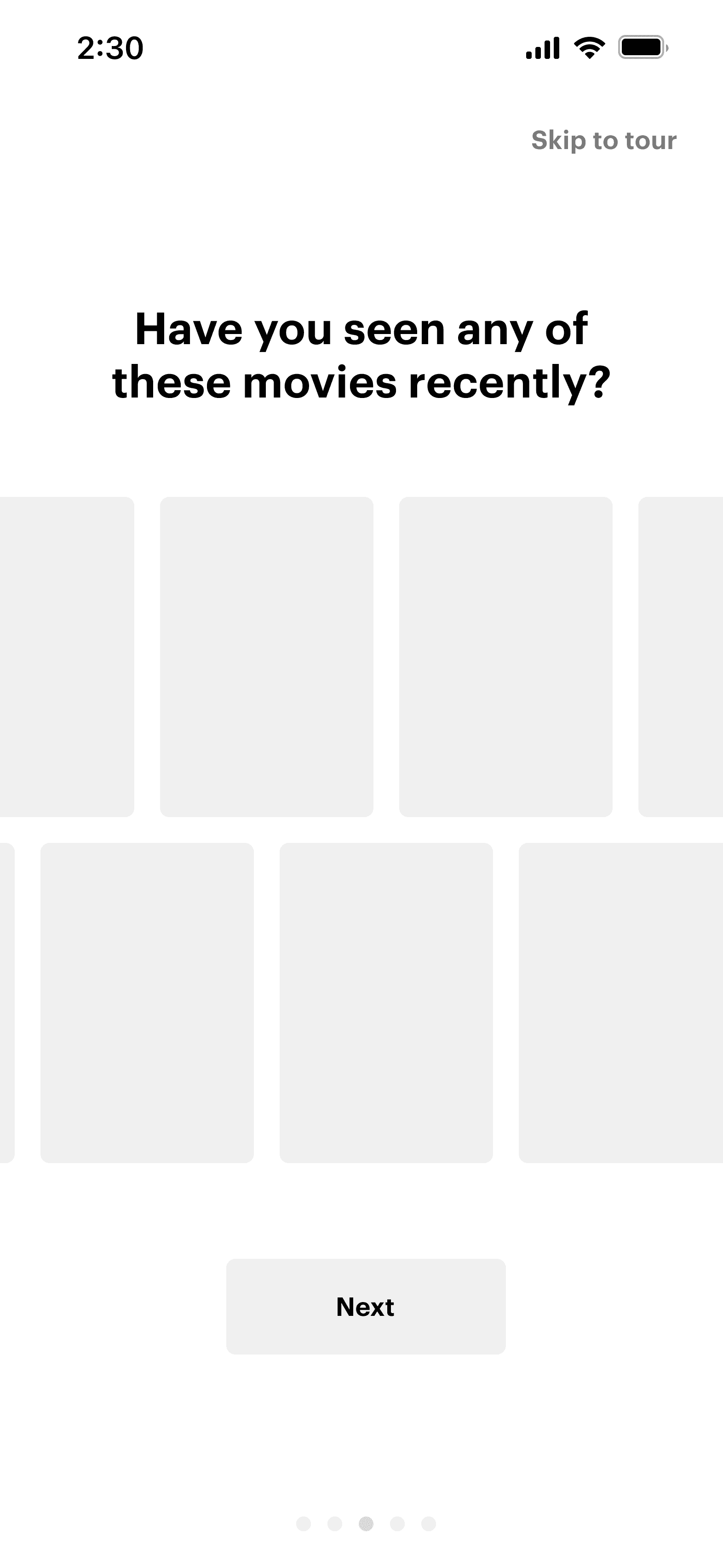
We each focused on a different part of Letterboxd's mobile experience, covering onboarding, the four navigation tabs, and films. I was tasked with redesigning the film page, and our group periodically met to discuss the changes we made and ask for feedback. By the end of this process, we executed our own and our team members' ideas for improvement.









Test
A round of user testing
Before we moved on to hi-fis, we wanted to get feedback on what was working and what wasn't so that we could make an improved final product. So, we prototyped a few key interactions and conducted 12 user tests. Here's what we found:
Users found many of our changes simple and intuitive.
People expressed that they liked the added personalization and how easy it was to discover new films, see friend activity, and edit their profile.
A few features were interesting, but unclear in execution.
Some screens, such as editing favorite films on the profile page and the filters on the search page, were appreciated but could be reworked.
Some users had trouble with small text and touch targets.
We took note of where users struggled and planned to remediate this in our final design.
Stay tuned…
Currently in progress!
This case study is currently in progress! However, if you'd like to see our work, take a peek at our slidedeck here.